
About Mago
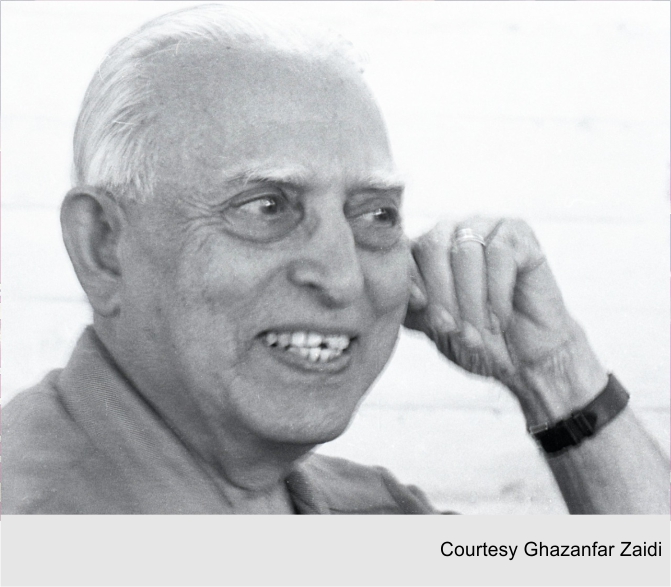
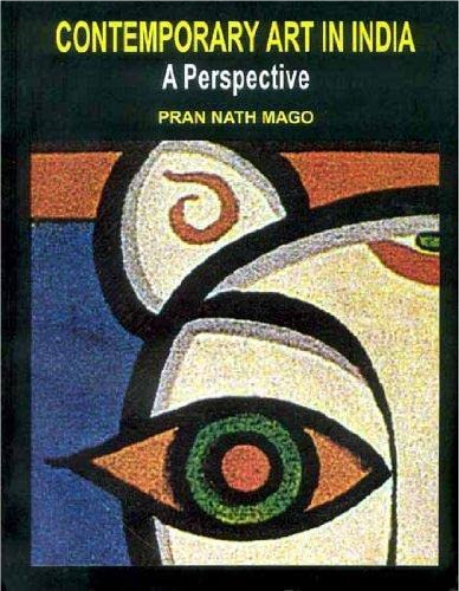
Prof. Pran Nath Mago was a well-known Indian artist whose works can be found in the National Gallery of Modern Art, Delhi, College of Art, Delhi, and Punjabi University, Patiala, among other institutions, as well as in prestigious private collections. He authored the foundational book, Contemporary Art in India: A Perspective, published by the National Book Trust in 2001.
The youngest of six children of a lawyer, Ram Lal Mago, and homemaker, Parvati Mago, he was born in Gujarkhan, near Rawalpindi in present-day Pakistan, on 22 August 1923. He was always “charmed” by drawing, he would say, but it was only when he was in class VII that the local school got a trained art teacher, Trilok Singh Chadha, who could nurture his talent and interest in art. After finishing his intermediate studies at Gordon College, Rawalpindi, Mago went on to study for five years at the Sir JJ School of Art in Mumbai, graduating in 1945.
In 1943, he said, he opted for composition in the Indian style, making sure there was no compulsion to paint any religious or mythological themes. At the time, he noted, the thematic interests of students centred on typical village life, particularly scenes relating to the village well (panghat). He and some others preferred themes which related to the time, like famine, war and the freedom struggle.
After completing his course, he moved to Lahore to establish himself as an artist, completing a certificate course in miniature painting from the Mayo School of Arts there from 1946-47. He would go on to forge close associations with seniors like S.L. Parasher and B.C. Sanyal; the latter had set up the Lahore School of Fine Arts (popularly known as Sanyal’s Studio). Sanyal allowed him to use the studio; Mago described it as a “lively workplace” where he made lasting friendships. For this is where he met contemporaries like Amar Nath Sehgal and Krishen Khanna. These friendships would continue in Delhi, after Partition forced all of them to migrate.
In September 1947, he moved to what had become India in the aftermath of Partition, in an army convoy, leaving behind his artwork and most of his belongings. His family never managed to live together under one roof again; his mother passed on within months of Partition and his father died in 1950. Their efforts to bring across one of his elder brothers, who had been hospitalised in Lahore at the time of Partition, failed and they were told within a couple of years that he had passed on.
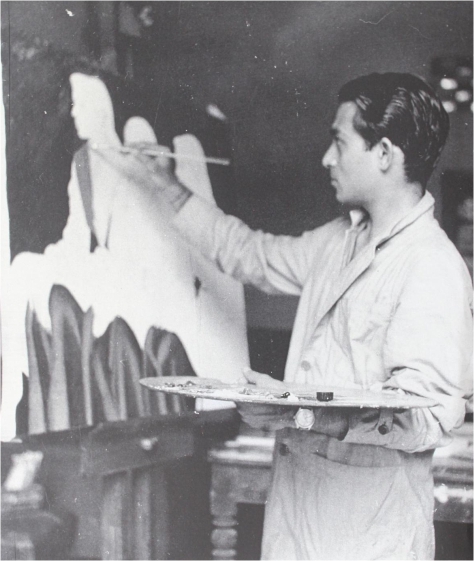
Mago picked up a part-time teaching job in Delhi and took up commissions to make ends meet, practising art alongside. In 1949, he became one of the founder members of the Delhi Silpi Chakra group of artists. During his initial teaching stint, he met Prema Mathur, a student; they married in 1951 and went on to have two daughters, Punam and Chandrika.
Mago’s interests ranged from art and craft to literature, history, sociology and philosophy. He read voraciously, and, in the decades that followed, wrote extensively on art, folk art and craft. As director of the Delhi Design Centre, All India Handicrafts Board, he focused on the craft sector in the1950s-60s. Through the 1970s and early 1980s, he taught fine arts at the College of Art, Delhi, with a government deputation to Malta in the mid-1970s to set up an art and craft school in that Mediterranean country. He participated in exhibitions in India and abroad and during his stint in the crafts sector, spearheaded experiments in the use of traditional craft methods in new designs as well as for creative expression. He was a member of a series of committees in the art and craft field, and a member of the sub-committee for design of the time capsule embedded at Shantivan in Delhi.
After retirement in 1981, he took on the additional avatar of an art critic, primarily for The Patriot newspaper, participated in national- and state-level seminars and conferences on art and curated some significant exhibitions. In the 1990s and early 2000s, he took part in several graphics workshops organised by the Udayan Care trust at the College of Art, Delhi. In 1998, he was honoured with the emeritus fellowship in visual arts by the Union government. In 2002, he delivered the Coomaraswamy Memorial Lecture, organised by the Lalit Kala Akademi, on Geometry—The Archetypal-Form Language. In later years, Mago was particularly convinced of the need to introduce art and aesthetics in general education in some form, given the disturbing ugliness he saw all around him.
Today, his collection of books and papers is with the Kiran Nadar Museum of Art, Delhi. His collection of newspaper and magazine clippings on the evolving art scene, and individual artists, is with the Jamia Millia Islamia university, Delhi. Contemporary Art in India: A Perspective has seen several reprints of both the original English publication and its Hindi translation, which first came out in 2006.
His works of art have attracted wide recognition and appreciation. Referring to his early work, the well-known artist, Satish Gujral, noted in A Brush with Life: Satish Gujral, An Autobiography (1997) that “Mago’s style of painting stood out as a testament to technical competence. It was a superb example of indigenous modernity.” Gujral, whose family was known to Mago’s, was a fellow student at the Sir JJ School of Art. They remained firm friends.
In My Contemporaries (1966), G. Venkatachalam (a distinguished author and the first president of the All India Association of Fine Arts in 1947) wrote that Mago’s varied experience and experimentation in different styles led him to develop “a striking style of his own which, he soon found, had much in common with such modern phases of art as Impressionism and Post-Impressionism.”
“All art,” wrote Venkatachalam, “is experimentation, and he is truly a good artist who is both eclectic and traditional.” He concluded: “It is a far cry—this strange development of Mago who (wanted) to be a miniature painter after the tradition of the Mughal (and) Rajput schools…to this robust modernism, with its powerful strokes, bold colour designs and rough finish.
” But artists are that way; they must follow their star and fulfil their own destiny. True artists, I mean, and Mago is a true artist.” Mago was 26 when Venkatachalam first wrote this piece.
Career Highlights
P.N. Mago studied at the Sir JJ School of Art, Mumbai, from 1940-45, following it up with a certificate course in miniature painting at the Mayo School of Arts, Lahore, in 1946-47.
Authored: Contemporary Art in India—A Perspective, published by the National Book Trust, Delhi (2001); the Hindi translation, by Soumitra Mohan, came out in 2006
Monographs on Amar Nath Sehgal (1993) and Gurcharan Singh (1995), published by the Lalit Kala Akademi, Delhi
Wrote extensively on art, folk art and crafts in various well-known journals and magazines
Lectures: Delivered the Coomaraswamy Memorial Lecture, organised by the Lalit Kala Akademi, on Geometry—The Archetypal-Form Language (2002)
(Click here to read the lecture)
Participated in national- and state-level seminars and conferences
Positions held: Professor in fine arts, College of Art, Delhi (1969-81); adviser on arts and crafts to the government of Malta, on deputation from the government of India, to set up a school for training in arts and crafts (1974-78); director, Delhi Design Development Centre, All India Handicrafts Board (1958-69); senior teacher at the Government School of Arts, Punjab (December 1951-August 1956); lecturer in art at the Delhi Polytechnic, ministry of education (August 1948-December 1951)
President, Delhi Crafts Council (1978-82); president, Crafts Council of India (1972-74); founder member, Delhi Silpi Chakra, Delhi (1949)
Awards/honours: Awarded two-year emeritus fellowship by the Union human resource development ministry’s department of culture (from 1998) for his “outstanding contribution to the preservation and promotion of Indian tradition and culture”; honoured as eminent artist by Punjab Art Heritage, Jalandhar (1997); awarded Ford Foundation grant, administered by the Institute of International Education, New York, US (1965-66); awarded grant in aid by the Union ministry of education for research studies in art (1948)
Major exhibitions curated: Dreams and Visions, an exhibition of paintings by Elizabeth Sass Brunner and Elizabeth Brunner, for the Indira Gandhi National Centre for the Arts, Delhi (2000)
Delhi Silpi Chakra—The Early Years, for the National Gallery of Modern Art, Delhi (December 1997-January 1998)
Vision Recaptured, for the British Council, Delhi (1997)
Contemporary Indian Painting, for the Indian Council for Cultural Relations, Frankfurt, Germany (1986)
Search for Roots, for the Lalit Kala Akademi, Delhi (1986)
