
Reminiscences
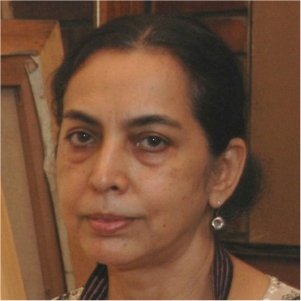
Arpana Caur
Artist
When I remember Mago Sahib, I think of all the lost old-world gentleness and the ability to wear learning so lightly. That generation is gone with the winds of Time. “Pavne mein Pavan Samaaya, Jyoti Jot Ral Jaaye, Maati Maati Hui Ek…..” (Air is absorbed in Air, Fire in Fire, Earth in Earth). His friends, Sanyal Sahib, Amar Nath Sehgal, Satish Gujral, Gurcharan Singhji the potter, Parasherji, all gone into the great void, all with the flavour of a lost homeland (Pakistan) reflected in their nostalgic artworks, some of which are thankfully housed at the Partition Museum, Amritsar.
But my best memory is of travelling with him, NGMA director Dr Anis Farooqui and Nandagopal from Cholamandal. As a member of the purchase committee, I had proposed we travel to 5-6 cities. Why should artists send their works, at great inconvenience, only to Delhi? They all agreed to the suggestion from the youngest member (me) and we went to Jaipur, Chennai, Bhopal, Chandigarh, Kolkata and Santiniketan, within the travel budget. When I went to Jaipur, I already had fever but did not withdraw, as it was my suggestion to begin with. Mago Sahib felt my burning forehead—I had 103º fever—and sent me back by the first flight after the meeting, a glimpse of a father I never had. Surprisingly, we had no differences of opinion in the choices. It was one family, all the other three so gentle and egoless. Nandagopal and I had been so afraid of being on this committee! Nandagopal became my best friend in the art world.
I was deeply honoured to be included in Mago Sahib’s magnum opus on Contemporary Art, into which he put so many years of his life. He refused to accept even a thank you and simply kept his hand on my head. That touch still remains with me, that blessing from a great senior artist and a humble human being. “Mithat Neeveen Nanak” (there is sweetness in humility).
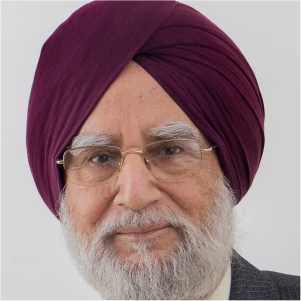
Prof. Paramjeet Singh
Former Officiating Principal, College of Art, Delhi, Printmaker and Painter
I became acquainted with Mr Pran Nath Mago in 1967-68, when he was director of the Delhi Design Development Centre at Okhla. One of my classmates had joined the centre as a designer and I visited him to see the design development for various handicraft articles. There I was introduced to Mr Mago. We didn’t interact too much at the time. But in the same year that I was selected as lecturer at the College of Art, Delhi, Mr Mago joined as professor of painting.
His contribution to contemporary art is reflected in his sketches of Jallianwala Bagh, which touch the heart of every person who went through the fight for Independence. Another contribution is the book Contemporary Art in India: A Perspective. To my knowledge, no one has written so extensively covering all the regions of India.
Mr Mago was a very humble and polite human being. I never saw him losing his temper or speaking loudly. He always met me with a smiling face that spread positivity in the atmosphere. I will never forget that smiling and welcoming expression.
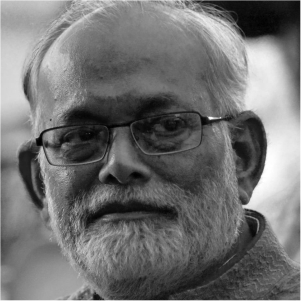
Ghazanfar Zaidi
Former Dean, Faculty of Fine Arts, Jamia Millia Islamia, Delhi
As I recall my cherished memories with Mr Mago, a mentor par excellence, I am reminded of the profound impact he had on my life and the lives of countless others. His wisdom, kindness and unwavering dedication continue to inspire us even in his physical absence.
Mr Mago's demeanour exuded discipline, grace and intellect. He had an aura that filled the room, leaving an indelible impression on my young mind.
During our conversation, Mr Mago offered a piece of advice that would shape the course of my life. He urged me to complete my 11th standard education before embarking on any career decisions. This seemingly simple counsel resonated deeply, especially given my family's background. His insistence on the value of education opened a new chapter in my life, steering me towards the path of fine arts.
I went on to complete my 11th standard education, pursued a diploma and eventually ventured into higher education in fine arts. During my time as a student at the College of Art, Delhi, I was fortunate to have Mr Mago as our principal for the evening course. Beyond his academic role, he displayed an innate connection with students, addressing administrative concerns, ensuring the upkeep of the institution and nurturing an environment conducive to learning. His teaching style was characterised by the freedom he offered to students, fostering an atmosphere where creativity could thrive.
Mr Mago's illustrious career spanned decades, with his influence reaching across generations of aspiring artists. His contributions were pivotal in shaping India's art scene, making him an integral figure in the nation's cultural narrative. As I embarked on my own journey as a professor at Jamia Millia Islamia university, I had the privilege of witnessing Mr Mago's mentorship first-hand. He played a key role in designing and mentoring the annual refresher course for art educators, where participants from across the country eagerly sought his insights and wisdom.
Mr Mago's commitment to education and his dedication to sharing knowledge were unmatched. He often drew from his experiences, regaling us with anecdotes from his time in Malta and his role in establishing an art school. His passion for empowering art teachers and his desire to motivate them were evident in every interaction.
Another testament to his generosity was his extensive collection of newspaper clippings chronicling India's evolving art scene. Despite lucrative offers, he selflessly chose to donate this invaluable resource to Jamia university's History of Art Archive. This act encapsulated his ethos of prioritising education and nurturing future generations.
Even in his 80s, he was very attentive, very independent. He used to drive his own car. This one time, he looked a little disturbed. When I asked him what had happened, he said he was upset because he couldn’t drive the car. He had taken a cab that day. A couple of months later, we heard he was no more.
Let us carry forward the teachings, commitment to education and unwavering passion for nurturing talent of this remarkable teacher, mentor and visionary. Mr Mago's influence transcends time, reminding us that the true essence of education lies in igniting the flames of curiosity, fostering creativity and touching lives in profound ways
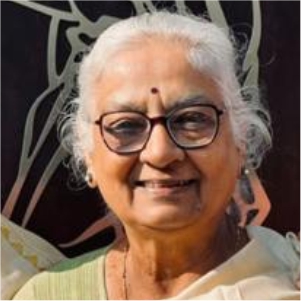
Dr Varsha Das
Writer
I would often meet Prof. Mago and his wife at the exhibitions of other artists. Both of them were always gentle and smiling. However, I was not fortunate enough to view and review any of his exhibitions in Delhi. I knew that he was a figurative painter and had heard about his painting ‘Moonlight Over Jantar Mantar’.
Prof. Mago had written an excellent book for the National Book Trust when I was working there as the chief editor and joint director. Contemporary Art In India: A Perspective is an authoritative book on the subject, reprinted a couple of times and also translated into Hindi by Soumitra Mohan. For the cover of the book, he had enlarged a portion of Jamini Roy’s painting, a big eye of a female figure. It was unique and attractive.
Kanchan Chander
Artist
Prof. P.N. Mago taught me in the early years of the College of Art. He taught me composition and his ideas on Bauhaus not only influenced me but were reflected in my art. So much so that I became very fond of him, and so did he. We became very good friends and actually had a group—Prof. Mago, Prof. S.S. Vohra from the sculpture department, Jai Zharotia from the painting department. We would all sit together after a show, do adda baazi, in someone’s house. Their wives would cook such lovely meals and we would have endless discussions on art, on the show we had seen, on the future of art.
He also wrote in one of the brochures for my solo shows. Recently, I found his notes, which he had typed and corrected by hand, so I have something rare from him. I have great memories of him and Mrs Mago, especially in their Nizamuddin house—even before Diwali, over Diwali—we would have such a beautiful time
Kavita Nayar
Artist
Mago Sir was a man with an outstanding personality, warm-hearted, gentle and very straightforward. In the early 1980s, soon after I had moved from Santiniketan to Delhi, he was the one who introduced me to the contemporary art scene in the Capital. He became like a father figure; my then two-year-old daughter used to think he was her Nanu (grandfather).
It has been 17 years since he passed on but I still miss those wonderful evening sessions of intense discussion. I learnt a lot from them. And I will always be indebted to Mago Sir for showing me the correct path to enrich my creative pursuits.
Jagdish Chander
Artist
Prof. Mago was my teacher at the College of Art, Delhi, in 1973. He was an inspiring teacher, able to explain concepts simply and clearly, and very supportive. Once he retired from the College of Art, Prof. Jai Zharotia requested him to take classes in the department of painting for some time. It gave more students an opportunity to benefit from his experience. For he was not only knowledgeable, but willing to share that knowledge.
In the 1980s, he also began writing about art and artists, and reviewing exhibitions, for The Patriot in Delhi. To my good fortune, he wrote for my catalogues too. His immense kindness, helpful nature and encouragement for other artists, particularly younger ones, were heartwarming. To this day, I remember him as a mentor, a very good artist, a scholar—and a very kind person.
Amba Sanyal
Daughter of B.C. Sanyal, Costume Designer for Theatre and Cinema
My childhood memories of Mr Pran Nath Mago and Mrs Prema Mago are of an always smiling couple, full of enthusiasm and warmth. There seemed to be no dearth of ideas to discuss and imaginary projects to work on. Some of them, I dare say, would be realised. For me, Mr Mago was my father B.C. Sanyal’s most dear and dependable associate in their work together as educators, painters, organisers and sharers of ideas, expressed through their writings. Later, I got to know him better as a student at the College of Art, Delhi, where he was a faculty member.
It’s difficult to forget the earnestness and determination with which he compiled the history of the Delhi Silpi Chakra, preparing the catalogue on it for the National Gallery of Modern Art exhibition he was curating in 1997-98. And, not least, the radiant smile at the end of all that effort.
After college, I also worked under Mrs Mago when she was heading the interior decoration department at the government Women’s Polytechnic. She led the department with a sure hand and helped me settle into the arduous task of teaching. I believe they had met in the arts department of the Delhi Polytechnic when it was in Kashmere Gate, much earlier.
My mother was a great admirer of both—and of the Mathur clan’s togetherness and cooking expertise! Mrs Mago came from the Mathur community.
I knew that Mr Mago had been my father’s pupil in Lahore at the Regal Studio but I had not associated his art with that period somehow. I discovered the quality of his art fairly recently, when I was researching for an online lecture on my father. This is when I discovered his bold strokes and vibrant colours and the pain of Partition, of which he too was a victim.
This old association was the bedrock of the very deep relationship my parents and Mr and Mrs Mago shared. Every year, they would invariably arrive in the morning on Baba’s birthday—earlier on Mr Mago’s scooter, if I remember right, and then his car. We always looked forward to the cheer they brought with them!
Dr Vipan Chandra
Memories of a Beloved Uncle
Lucky human beings grow up with different kinds of bonds that add meaning and joy to their lives. The most obvious bonds are those between parents and children, siblings, cousins, friends, spouses, and in some cases teacher-disciple bonds. There is one bond, however, which is less often a subject of conversation outside families. It’s the bond between uncles and aunts on one side and nephews and nieces on the other.
Click Here to Read More..
Punam Mathur
Mago's Daughter
Papa was a very loving father. He doted on us two sisters, indulged us and hardly ever said no to anything. He took us for many outings – to Rajghat, where we would roll down the grassy slopes, to the zoo, to the dolls museum, to Bal Bhawan, where we loved riding on a children’s train, or even just an ice cream or night picnics at India Gate. Every evening, he would have a drink, and I looked forward to having my drink with him – a Coke with ice!
I remember him helping me with my homework. I would lie down with him in bed at night and he would revise history with me – dates and events.
I watched him play badminton a few times and recall thinking how good he was at the game. Very strong and definite strokes, much like his art!
Simple memories of simple times.
He was always very particular, and if he saw anything dirty or out of place, he would take a cloth and clean it himself, or put it back in place, saying “aankh ko chubhta hai (it hurts the eye)”!
He rarely talked about the Partition days but he did tell us how his father had given him a cheque for Rs 500 (a substantial amount at the time). Since he only carried a cloth sling bag with him on his journey across the border, he put it in his kurta pocket. But he couldn’t encash it, for the ink ran in the heat.
He also told us how he and a very close friend of his – Amar Nath Sehgal – lived in a room above a garage in a bungalow on Prithviraj Road for some time and would cycle to Delhi University on work. Sometimes, he would tell us, they would take vitamin tablets in place of food since they didn’t have money.
He came from a well-to-do family and had been thoroughly pampered as the youngest child– all that was left behind with Partition. He had no option but to adjust to this new life situation. He did so with grace.
He was fond of the good things of life – hardship made him realise that money wasn’t everything. A giver, he had a soft heart. Despite the struggles he faced, he never complained. Over time, he built a comfortable life for himself and his family, and came to be regarded as an artist of great calibre.

Chandrika Mago
Mago's Daughter
My strongest memories are of an open, welcoming home. My parents loved meeting people. They were hospitable, sensitive and caring, willing to go out of their way to help, with a strong sense of ethics and commitment to work. They never chased money; they spent little on themselves. Yet, I don’t remember wanting for anything.
They were unsure of my choice of profession—journalism. Papa was extremely protective but though they worried about the late hours and the places my work took me to, they were supportive and proud too.
As a child, you tend to take your parents for granted. When I look back now, I think Papa’s mind was always creatively engaged. Even when he was driving and had to stop at a signal, or was stuck in traffic, his forefinger would always be moving on the steering wheel in movements that seemed to suggest he was creating a shape. In Malta, I saw the concentration he brought to his work on each portrait. I marvelled at them. I asked him why he didn’t draw portraits of us; he simply said, “Beta, you won’t sit still.” I couldn’t argue with that.
When we returned to India and, for a variety of reasons, I had to take up art as a subject in school for a year, I saw the teachers looking at my parents and thinking I would be able to do it. I was apprehensive, I didn’t have an ounce of their artistic talent. When the time came to prepare for the exam, I went to Papa for some quick tips. Indulgent he may have been but he wouldn’t compromise with his work. He told me you have to learn properly–proportion, perspective.
When my mother, his best friend, passed on in 2000, he refused even to go to exhibitions for a while, since everybody would tell him they were used to seeing both of them together. One of my cousins, Bhushan dada, advised me to encourage him to start painting, saying he would become so absorbed he would forget everything. When I saw him creating his last painting, Nature at War, in 2003, I realised how true that was. I would leave for work, telling him to remember to have lunch. When I would return, he would still be working. I would ask if he had eaten, he would look up absent-mindedly and say, “No…”
Even today, I can see the smiles on their faces; memories of their generosity of spirit, the affection, have stayed fresh. I admired the fact that despite the trauma he must have gone through, the need to rebuild his life completely, he didn’t compromise on his values and ethics. I think that has helped me hold on to my values and ethics, whatever the circumstances. They really were an extraordinary couple.

Taruni Mathur
Mago's grand-daughter
Nana was a force of nature. Quiet, but strong. He and Nani, and how they went through life together, defines grace. They were a team, and an amazing team at that, and I still can’t think of one without thinking of the other.
As I grew up, Nana realised that I was very interested in art. He was delighted, and I was very, very fortunate that he thought it worthwhile to spend time sharing tips with me during summer holidays or other moments. I received a major scolding from him one day, when he saw that I was spending more time on music than art – You always spend time playing the keyboard, and not enough on art!
It was when he actually decided to open up his French pastels and teach me how to use them, that I realised he really thought I could take this up. He was always so passionate while speaking about art, and always laid emphasis on “seeing”. Art is all about seeing, and all about perspective, he would say.
He was an absolute perfectionist. Even a bedsheet had to be laid down without a single crease. Everything had to be done in a certain way, with a certain rhythm. I remember his hands, big, strong, always reminded me of a papa bear in whose care everything would always be okay. His bedtime stories, about a goat in a rolling drum, the very aesthetic fans that we used on long, hot, sweaty summer nights during power cuts, and the urad dal that he would cook in ghee (to perfection) – the smells, sounds and sights of very happy childhood memories.
A couple of years before he passed on, he told me, when you sing or paint, you’re fooling yourself if you think it’s you singing, or you creating the artwork. You are just the medium. It’s all being channelled from the Divine.
That’s when I realised what his Art meant to him. It was his meditation and prayer.
When I saw him for the last time, he kissed me and said, “Be successful.” And when I said, “I have to be like my Nana”, he said, “No, you have to be better than your Nana.” I don’t know if I’ve done him proud yet, but even now I feel very, very loved by him and Nani – and deeply blessed to have had such wonderful grandparents.